
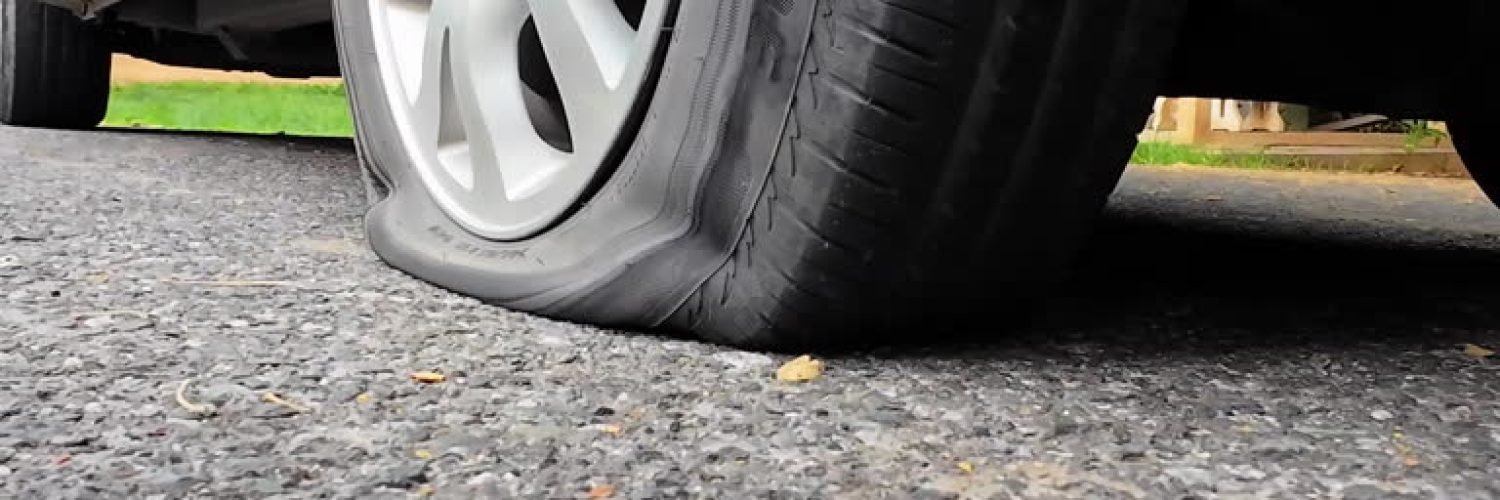
Short answer: often, yes, but only if the damage is in the right place, is small enough, and the tyre has not been damaged further by being driven flat. A nail or screw in the central tread can usually be repaired properly. Damage to the sidewall or the shoulder cannot, and the tyre has to be replaced.
That is the honest answer, and it surprises many drivers in both directions. Some assume any puncture means a new tyre. Others assume a quick plug in the roadside is as good as new. Neither is right.
This guide explains how UK tyre repair rules work, which areas of a tyre can be repaired, which cannot, and how to tell what is likely to happen to your tyre before anyone arrives.
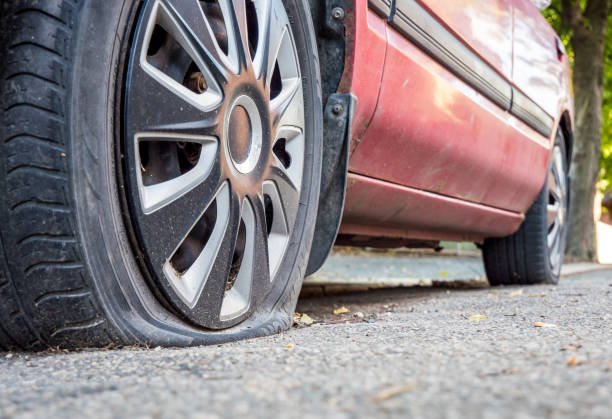
Can a punctured tyre be repaired in the UK?
Yes, a punctured car tyre can be repaired legally in the UK, provided the repair follows the British Standard for tyre repairs, BS AU 159. The standard is published by BSI (the current edition is BS AU 159G:2013) and is the reference UK tyre fitters work to. The British Tyre Manufacturers’ Association (BTMA) expects technicians to follow it. It sets limits on where on the tyre a repair can be made, how big the damage can be, how many repairs a tyre can have, and the method and materials used.
In practice, three questions decide the outcome:
- Where is the damage? Central tread can be repaired. Shoulder and sidewall cannot.
- How big and what kind of damage is it? A small hole from a nail or screw is very different from a cut, a tear or a large gash.
- What condition is the tyre in? Worn, previously mis-repaired or internally damaged tyres are not suitable.
No one can answer all three from a photograph or a phone description. The tyre has to come off the wheel and be inspected inside and out. That is why an honest fitter will say “it depends” until they have seen it.
Where on a tyre can damage be repaired?
Think of the tread as three zones across its width.
- The central tread (the repairable zone). This is roughly the middle three-quarters of the tread, often called the minor repair area. The tread here is thick and reinforced, and it flexes relatively little. Tyre-industry guidance based on BS AU 159 treats this as the only area where a puncture repair is acceptable.
- The shoulder. This is the curved edge where the tread turns into the sidewall. It sits outside the repairable zone. It flexes heavily in corners and carries a lot of stress, so a repair here is likely to fail.
- The sidewall. This is the side of the tyre between the tread and the wheel rim. It flexes constantly under load and has far less rubber and reinforcement than the tread. Any repair in this area is not accepted.
So the same nail can be harmless or fatal to a tyre depending purely on where it went in.
Quick guide: repairable or replace?
| Damage | Usually repairable? | Why |
| Small nail or screw hole in the central tread | Often yes, after inspection | Within the repairable zone, if the tyre is otherwise sound |
| Slow puncture caused by a small object in the central tread | Often yes, after inspection | Same as above, once the cause is found |
| Damage on the shoulder | No | Outside the repairable zone, high flex and stress |
| Cut, tear or puncture in the sidewall | No | Sidewall cannot be safely repaired |
| Bulge or bubble anywhere | No | Indicates internal structural damage |
| Exposed cords or visible internal damage | No | The tyre’s structure has failed |
| Large hole or long cut in the tread | Usually no | Size of the damage is beyond repair limits |
| Tyre driven flat for some distance | Often no | Internal sidewall damage is likely, even if the hole is small |
| Tread below the legal minimum | No | The tyre needs replacing regardless |
| Damage overlapping a previous repair | No | Repairs must not overlap |
Can you repair a nail in a tyre?
Often you can, but not automatically.
A nail or screw in the central tread is the classic repairable puncture. Because the object is still in the tyre, it can be tempting to pull it out and plug the hole. Please don’t. Leave it in place until a technician can look at it. While it is in, the object is partly sealing the hole, and its position tells the technician where the damage is.
The nail may still not be repairable if:
- it went in at an angle and the damage runs towards the shoulder or sidewall;
- the hole is larger than the repair limits allow (UK fitters commonly apply a limit of around 6mm for a car tyre);
- there is a previous repair too close to it;
- the tyre has been run on while flat, which can wreck the inner structure out of sight.
A technician has to remove the tyre from the wheel to check the inside of the casing. Damage often shows inside the tyre long before it shows on the outside.
What does a proper puncture repair involve?
A proper, permanent repair is carried out from the inside of the tyre, not just by pushing something into the hole from outside. In outline:
- The tyre is removed from the wheel so the inside can be inspected for damage.
- The damaged area is checked inside and out, including the position, size and angle of the hole, and the general condition of the tyre.
- The hole is prepared and cleaned, and the area around it is made ready to bond.
- A combination repair is fitted. This is a plug through the hole to fill the channel, joined to a patch bonded to the inside to seal the inner liner. It is often called a mushroom or plug-and-patch repair.
- The tyre is refitted, inflated to the correct pressure and checked before it goes back on the vehicle.
The point of doing it this way is that the technician can see the inside, and the repair seals the liner as well as filling the hole.
Are plugs, string repairs and tyre sealants proper repairs?
No. They are temporary measures.
Plugs inserted from the outside while the tyre is still on the wheel, and liquid sealants squirted in through the valve, are not recognised as permanent repairs under UK industry guidance. Neither lets anyone inspect the inside of the tyre. A tyre can be badly damaged inside while looking fine outside.
They have a place: to get you moving slowly to a place where the tyre can be properly dealt with. If you have used a sealant or an external plug, tell the technician. The tyre should still be taken off the wheel and inspected, and in some cases it will turn out it cannot be repaired.
When does a punctured tyre have to be replaced?
Replace rather than repair when any of the following apply:
- The damage is in the sidewall or shoulder.
- The tyre has a bulge, bubble, cut, tear or exposed cord. These are signs the internal structure is compromised.
- The hole is too large, or there are several punctures close together.
- The tyre has been driven while flat or very low on air. This can damage the inner sidewall, and the damage may not be visible from outside.
- The tread is at or below the legal minimum. In Great Britain, that is 1.6mm across the central three-quarters of the tread and around the whole circumference, for cars and light vans.
- A previous repair is nearby or overlapping, or an earlier repair was done badly.
- The tyre is run-flat. The BTMA has recommended that run-flat tyres should not be repaired, and many fitters follow that. Always check with the vehicle and tyre manufacturer.
Some fitters also apply tighter limits to higher speed-rated tyres. If your car has performance tyres, ask what the fitter’s policy is.
If a tyre can’t be repaired, it isn’t worth arguing with. A tyre that fails at speed is far more costly than a replacement.
Why driving on a flat tyre ruins repairs
This is the most common reason a repairable puncture becomes a replacement.
When air pressure drops, the sidewall folds and flexes far beyond its normal range. Even a few hundred metres can grind the inner surface and weaken the structure. The outside may look nearly normal, but the tyre is no longer safe to repair.
If you get a puncture:
- Slow down gently and stop somewhere safe as soon as you can.
- Don’t carry on driving to “get home” or “reach a garage”.
- Don’t pump it up repeatedly and hope. If it keeps losing air, there is a hole or a leak.
- Call for help from a safe place, away from moving traffic.
On a motorway, follow Highway Code breakdown guidance and never stand in a live lane to check the tyre.
Can a slow puncture be repaired?
Usually, yes, once the cause is found. A slow puncture is often a small object in the tread, but it can also be a leaking valve, a damaged wheel rim or a worn bead seal. Topping up the air only hides the problem. Get it checked, because a tyre that is repeatedly run under-inflated can end up beyond repair.
Is a repaired tyre safe?
A tyre repaired properly to the standard, by a competent technician, on a tyre that is otherwise in good condition, is considered a sound repair. The repair is expected to last for the remaining life of the tyre.
What makes the difference is the process: removing the tyre, inspecting the inside, using the right repair method, and refusing jobs that don’t qualify. If a fitter agrees to repair anything, anywhere, that should worry you rather than reassure you.
What to do if you think you have a puncture
- Stop safely. Don’t drive on a flat tyre.
- Leave any nail or screw where it is.
- Note where the damage is, only if it is safe to look. Never inspect a tyre beside moving traffic.
- Check for obvious warning signs: a bulge, a cut, exposed cord or a tyre that is completely flat.
- Get a proper inspection from a technician before deciding whether to repair or replace.
When you call a mobile tyre service, have your postcode, vehicle make and model, the tyre size on the sidewall (if you can read it safely), and a short description of what happened. A photo helps, but it can’t show internal damage.
How Sprinter Mobile Tyres can help
Sprinter Mobile Tyres Ltd brings tyre assistance to your home, workplace or a suitable roadside location across selected areas of London, Kent and Essex. Our insured and certified technicians have over five years of experience in mobile tyre services.
When you contact us, we’ll look at the details, assess the tyre and tell you honestly whether a safe repair is possible. Where it is, we can discuss repair. Where it isn’t, we’ll talk through suitable replacement options with you before any work starts.
- If your tyre can be assessed for repair, see our puncture repair service.
- If the damage rules out repair, see our emergency tyre replacement service.
Availability depends on your postcode, technician availability and safe access to the vehicle.
Call Sprinter Mobile Tyres on 07490 541199 to discuss your tyre and arrange assistance.
Frequently asked questions
Can a punctured tyre always be repaired?
No. It can only be repaired if the damage is in the central tread, is within the size limits, and the tyre is otherwise in good condition. Sidewall and shoulder damage, bulges, cuts and tyres driven flat generally need replacing.
Can you repair a nail in a tyre?
Often, if it is in the central tread and the tyre hasn’t been driven flat. The tyre has to be taken off the wheel and inspected inside before the repair is confirmed.
Can you repair a sidewall puncture?
No. The sidewall flexes constantly and is not part of the repairable zone. The tyre must be replaced.
Can a shoulder puncture be repaired?
No. The shoulder is outside the repairable area, so replacement is needed.
How big can a puncture be to be repaired?
The standard limits the size of the damage. UK fitters commonly apply a limit of around 6mm for a car tyre. A technician will measure it and confirm.
Is a tyre plug a permanent repair?
No. A plug on its own, put in from outside, is a temporary measure. A permanent repair is made from the inside after the tyre is removed from the wheel and inspected.
How many times can a tyre be repaired?
The standard doesn’t allow repairs to overlap, and some fitters limit repairs on higher speed-rated tyres. Ask the technician what applies to your tyre.
Can I drive on a punctured tyre to a garage?
It’s best not to. Driving on a flat or very soft tyre can destroy the sidewall and make a repairable tyre unrepairable. It is also unsafe.
Can run-flat tyres be repaired?
The BTMA recommends against it, and many fitters won’t. Check with the tyre or vehicle manufacturer.
Will a repaired tyre pass an MOT?
The MOT checks tyre condition, including cuts, bulges and exposed cord, and legal tread depth. A tyre that is properly repaired and otherwise in good condition shouldn’t be failed simply for having been repaired, but a tyre with damage that should have meant replacement may be.
Can a mobile tyre fitter repair a puncture at my home?
It may be possible where the vehicle is accessible and there is safe working space. The tyre still needs a proper assessment first. Contact us with your postcode to check availability.
